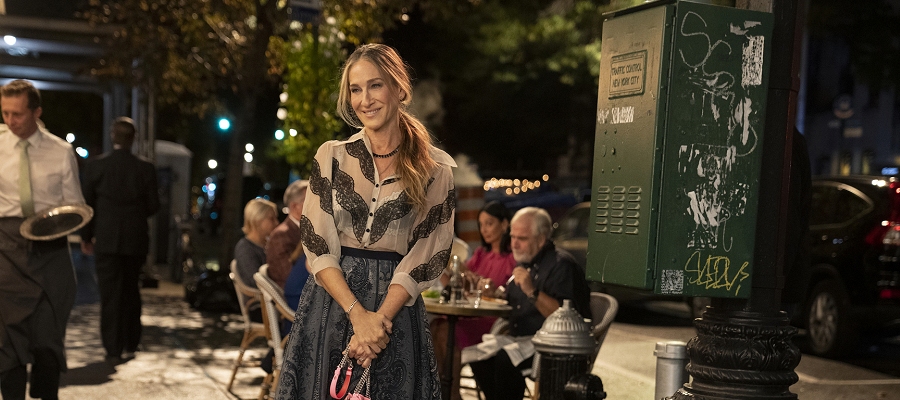








Sarah Jessica Parker for Financial Times
The story of Sarah Jessica Parker is one of Hollywood lore. She grew up in Cincinnati as one of eight, with a mother who wrangled them scholarships for ballet classes, took them religiously to the library and, in 1977, moved the whole family to New York in a VW van. Her mother also hustled them into one of the first affordable housing units on the brand-new Roosevelt Island. There’s young Parker, taking a bus, aerial tramway and subway every day to work on Broadway, playing an orphan and then Annie herself. There she is, spending her lunch money at the pinball arcade in Midtown.
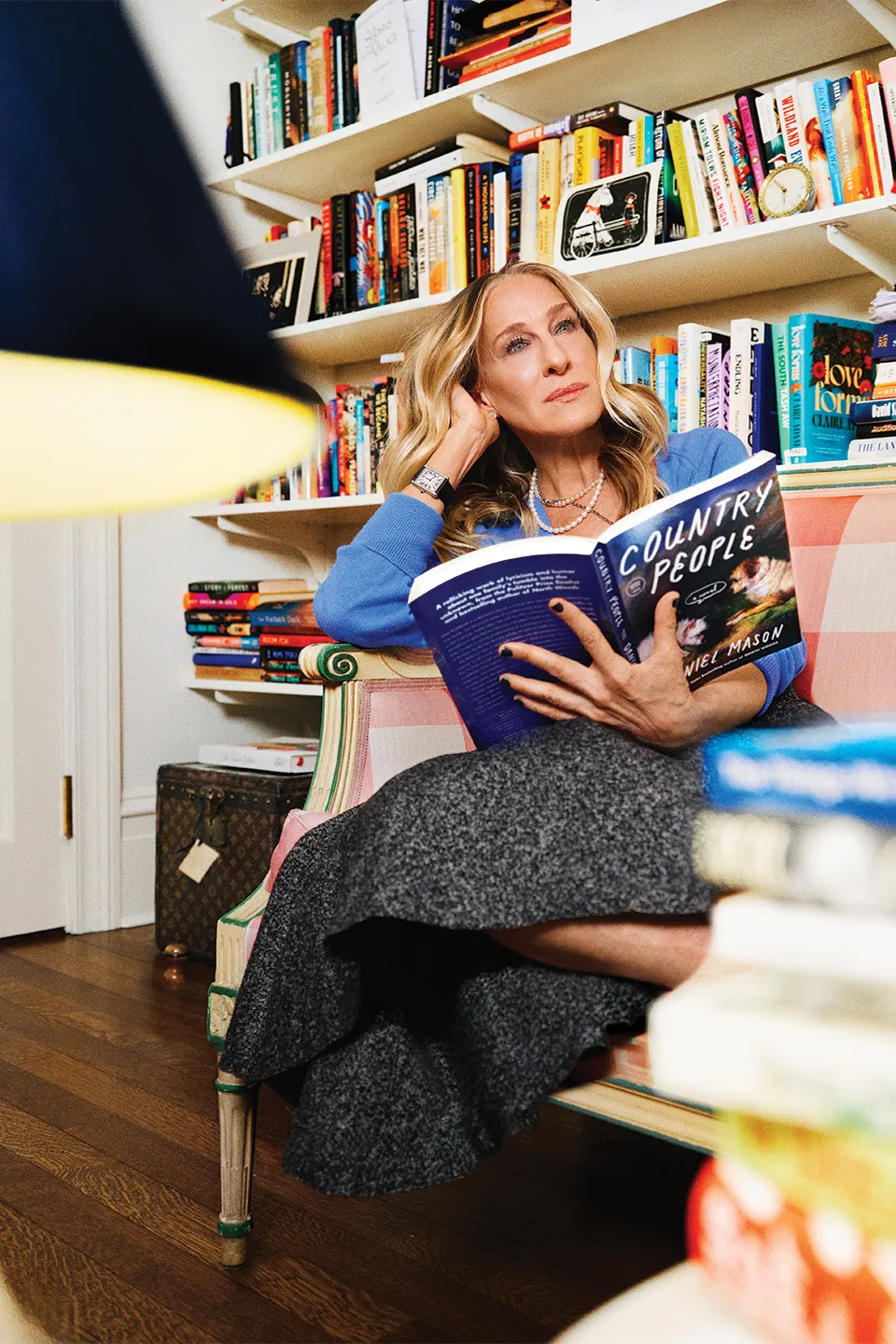
Annie grew up and became Carrie Bradshaw, with roles along the way in classics from Footloose to Girls Just Want To Have Fun. For decades on Sex and the City and its recent revival And Just Like That…, Parker played arguably the most famous single woman in history (beating out, in my opinion, both Elizabeth Bennet and Artemis, goddess of the hunt). As stipulated in her contracts, she also owns most of the outfits she wore as Bradshaw. She keeps all of it in archive bar one leather belt. “I don’t dress like Carrie, truly,” the 61-year-old actor tells me. We’re together in a grand conference room at New York’s Faena Hotel. “I can’t dress like her, and I would never dress like her. I’m not a big shopper at all. I have the same clothes I’ve had for a long time in my closet. But that’s why it’s exciting to play other people.”
“I would be sort of fraudulent to suggest she’s not part of me,” she goes on. After decades of “walking like her, tripping like her, approaching the island of Manhattan like her, there is a muscle memory. I’m capable of calling on her. But she doesn’t dominate.”
Parker is stunning in person, and extremely warm. She wears a Sandy Liang taffeta skirt with a thin grey cotton sweatshirt, a safety pin ruching the bust. (Later she confirms she has “a baker’s dozen” of the sweatshirts, bought “years ago” to cut and pin in different iterations.) The table in front of us is covered in diamonds; Parker is promoting Astrea London, a lab grown-diamond house where she is a shareholder and global creative director. “Initially when I met Nathalie [Morrison, Astrea’s founder and CEO], I was thinking about lab-grown diamonds in the most limited way,” she says. “What was exciting to me was all the potential. It had all this possibility inside it.”
In under a decade, lab-grown diamonds have gone from about two per cent of global diamond jewellery sales to “at least a third”, according to independent diamond analyst Paul Zimnisky. The science is now so advanced that most are chemically identical to mined diamonds – like ice made from a freezer versus a lake. These two facts are fundamentally changing how we see the value of a diamond. “I can tell you honestly, there’s no separation [to me] any more,” Parker says. “When I came in today, my brain didn’t say, ‘Oh my God, look at these lab-grown diamonds.’ I just see something beautiful.” Astrea seems to be helping the science along. Morrison shows me a string of chickpea-sized diamonds, wrapped around a string of freshwater pearls. It’s 174 carats in total, in D colour, the most colourless grade, and costs £240,000. Made with mined diamonds, it would cost millions. A jeweller would have to find enough gems that matched in size and quality, then figure out how to arrange them. Instead, Astrea gets the diamonds made to fit the design, which takes material scientists, chemical engineers and time.
Zimnisky, meanwhile, prefers the term “synthetic” to “lab-grown”, and is less sure about calling these diamonds “the same”; he says that although they are marketed that way, “the underlying preciousness and fundamental value is very different”. Instead he sees them more as reproductions of a painting, which buyers shouldn’t expect to be able to resell like natural stones. But because the supply is unlimited, he expects them to make up more than half of the market by 2030.
Major diamond houses such as Tiffany & Co, Van Cleef & Arpels and Cartier don’t currently use lab-grown stones, but Tiffany’s parent company LVMH has invested in a lab-grown producer. Parker says they’re hoping to build a brand with Astrea that, in 10 or 20 years, “has a real place, like any other luxury jewellery brand. That’s real, that’s not a folly.”